Pokhara, 27 October, 2026
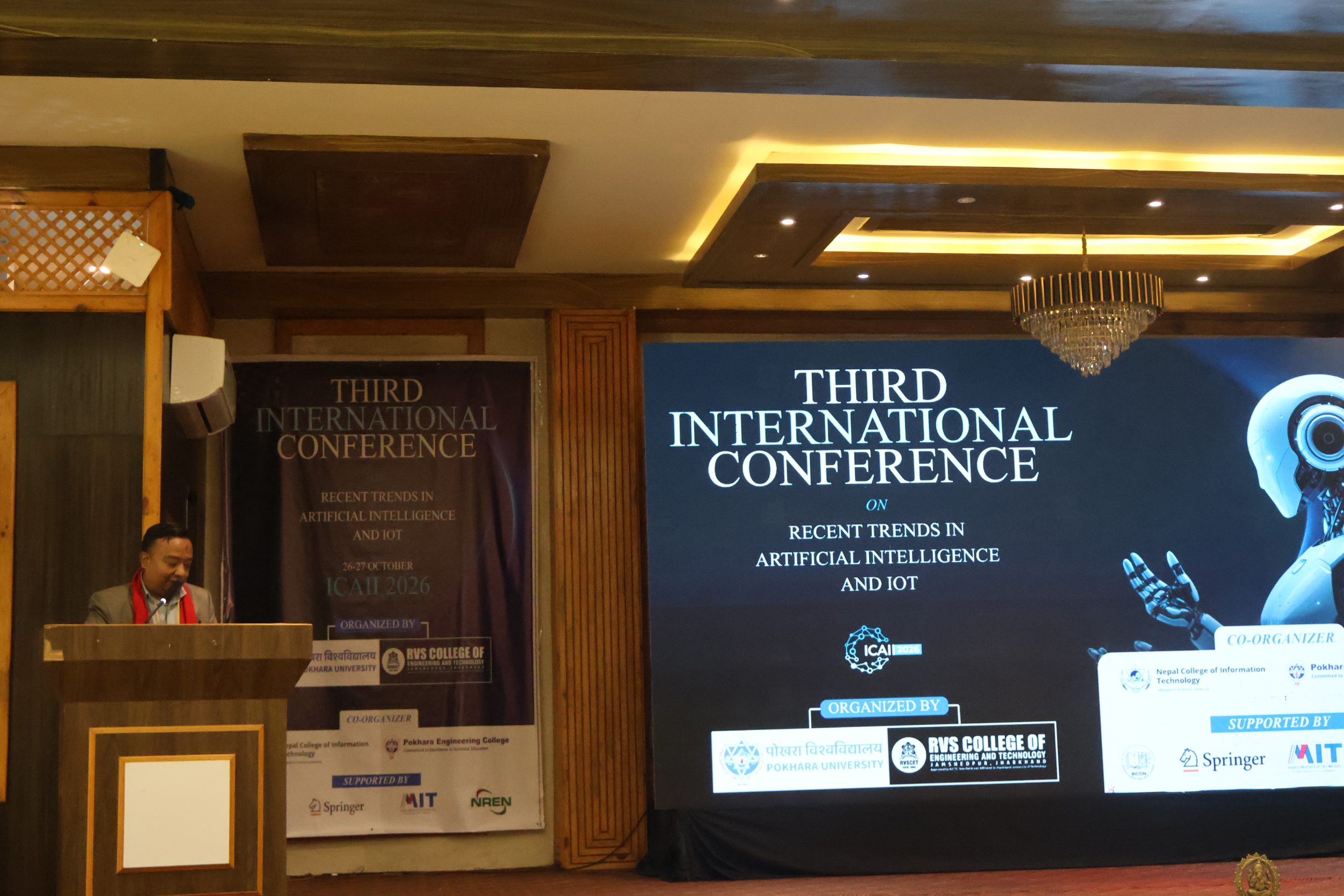
Pokhara University, Nepal, in collaboration with RVS College of Engineering and Technology (RVSCET), Jamshedpur, India, successfully organized the Third International Conference on Recent Trends in Artificial Intelligence and IoT (ICAII 2026) in a blended mode on October 26-27, 2026. The conference was jointly organized as part of the continued academic collaboration between the two institutions and reflected the implementation of the Memorandum of Understanding (MoU) signed between Pokhara University and RVSCET last year.
The conference was co-organized by Nepal College of Information Technology (NCIT) and Pokhara Engineering College (PEC), both affiliated colleges of Pokhara University. The event was supported by Model Institute of Technology (MIT), Nepal Research and Education Network (NREN), and Springer. While the conference featured both physical and virtual participation tracks, the physical sessions were conducted in Pokhara on October 26.
Organized with the objective of bringing together researchers, developers, academicians, and industry professionals working in the fields of Artificial Intelligence (AI), Internet of Things (IoT), and Blockchain, the conference attracted significant international participation and scholarly engagement.
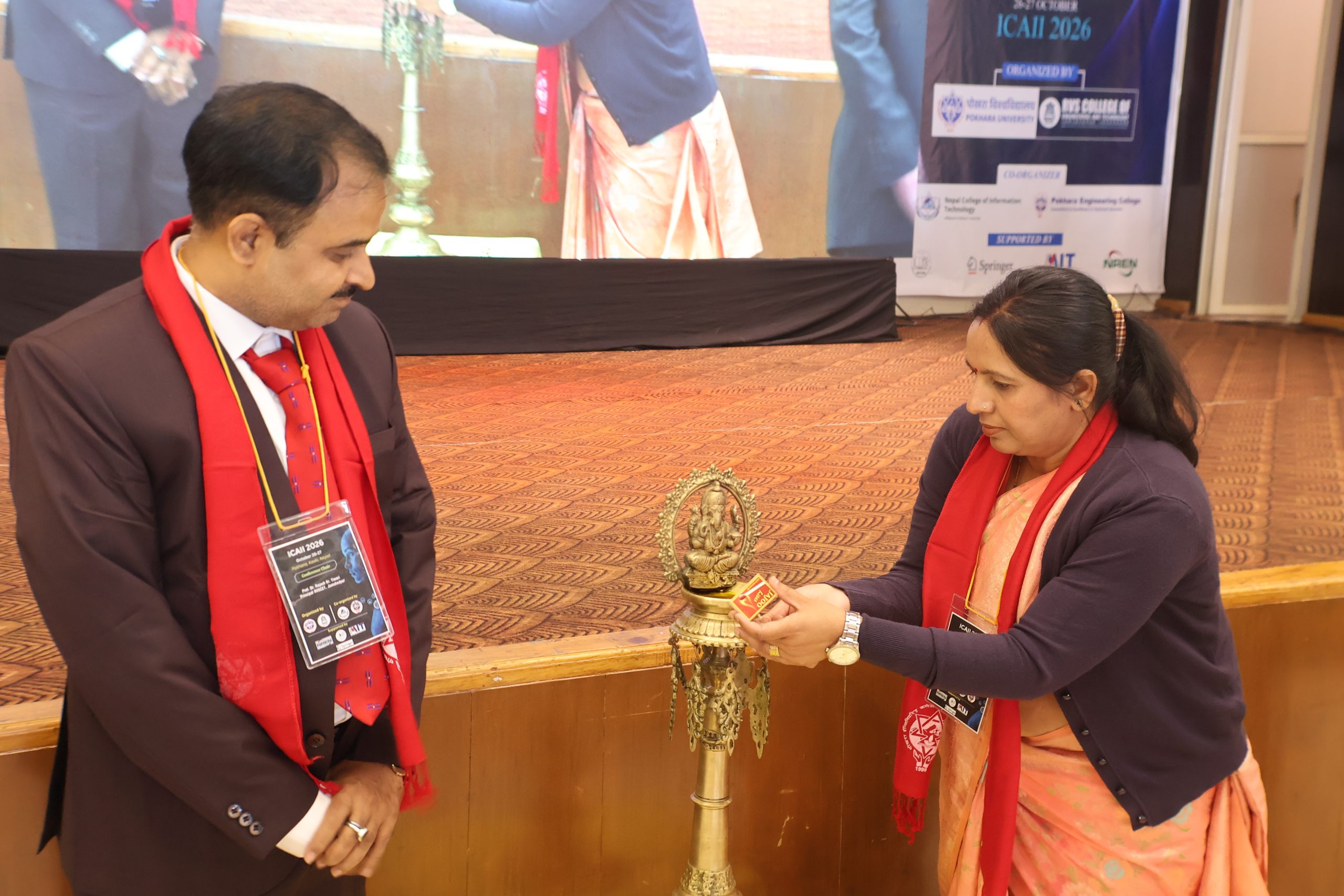
The conference was jointly inaugurated by the Registrar Prof. Dr. Nirmala Jamarkattel, who served as the chief guest of the opening ceremony, and Prof. Dr. Rajesh Kumar Tiwari, the conference chair, symbolizing the collaborative spirit of the event.
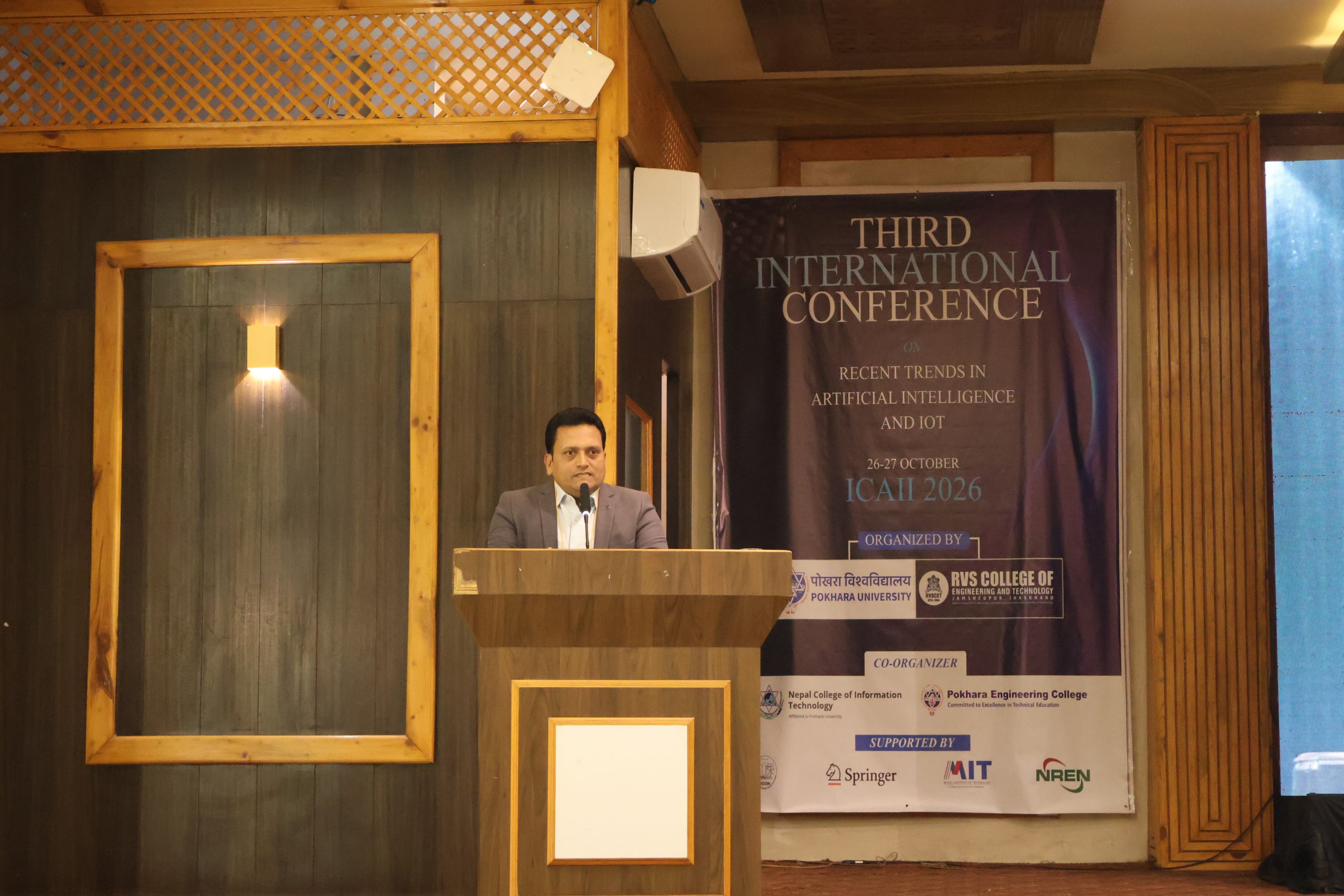
Delivering the welcome address and conference overview, Assoc. Prof. Dr. Deepanjal Shrestha, Executive Director of the International Relations Center, Pokhara University, and Convener of the Conference, welcomed the distinguished guests, international delegates, researchers, and participants. He expressed gratitude to the co-organizing institutions and supporting partners for their valuable contributions. Highlighting the overwhelming response received by the conference, he informed that nearly 300 research papers were submitted by researchers from countries including the United States, China, Malaysia, Iraq, England, India, and Nepal, among others. Following a rigorous double blind review process, 55 papers were selected for presentation.
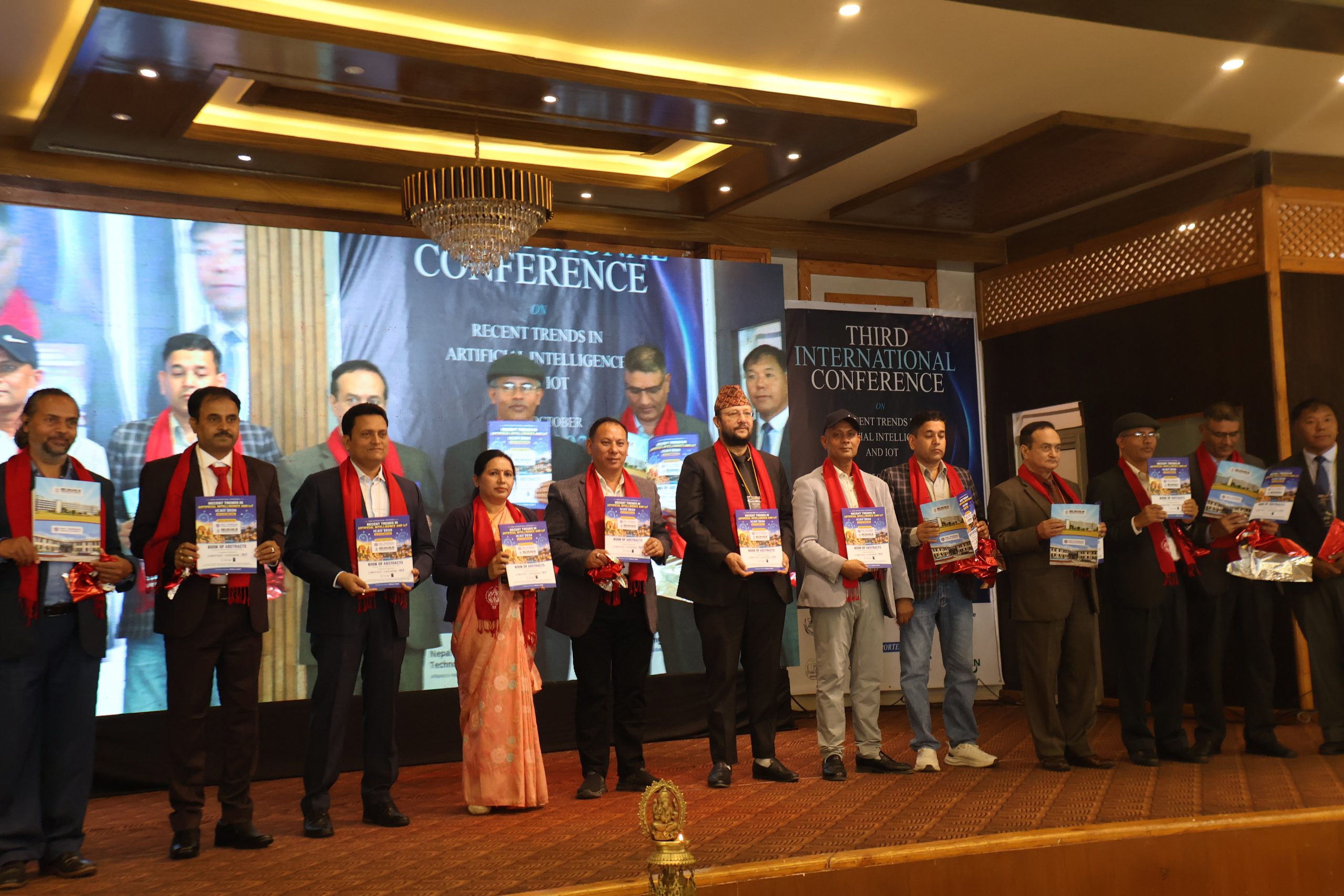
During the inaugural session, the Abstract Book of ICAII 2026 was jointly unveiled by the Chief Guest, Keynote speakers, Deans of Pokhara University, Guests of honour, the Convener, and Co-convener.
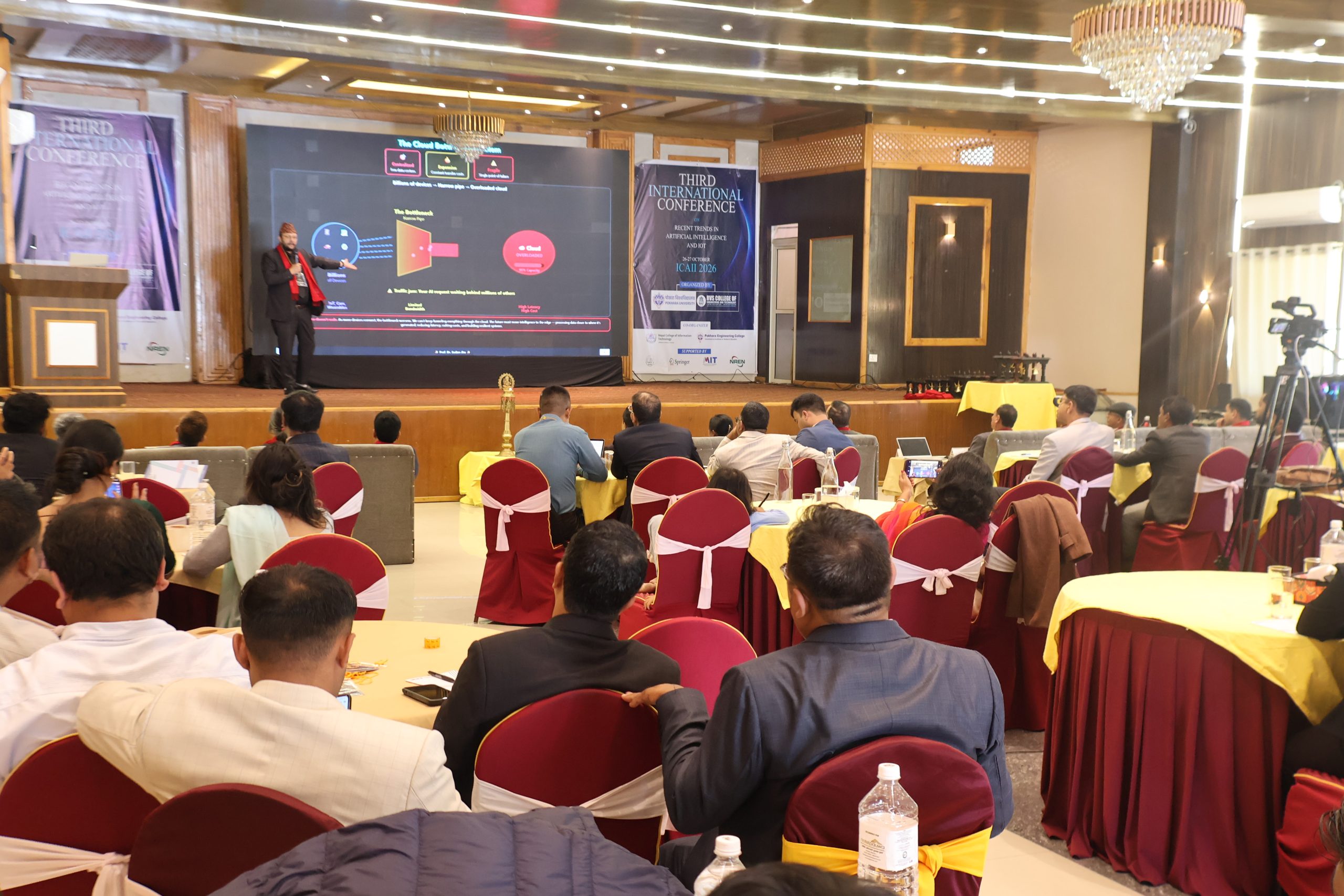
The conference then proceeded with a series of keynote sessions delivered by renowned experts. Prof. Dr. Sudan Jha, Honourable Member of the National Planning Commission, Government of Nepal, delivered a keynote address entitled “Convergent Infrastructure: IoT and Lean AI are Rewriting Every Job, Every Industry, Everywhere.” Similarly, Prof. Dr. Shashidhar Ram Joshi presented a keynote on “Changing the Dimension of Engineering and Technological Education in Nepal in the Age of AI.” Another keynote address was delivered by Prof. Dr. Subarna Shakya, who shared valuable insights on “From Policy to Protection: Harnessing AI and Digital Infrastructure for Disaster Resilience in Nepal.”
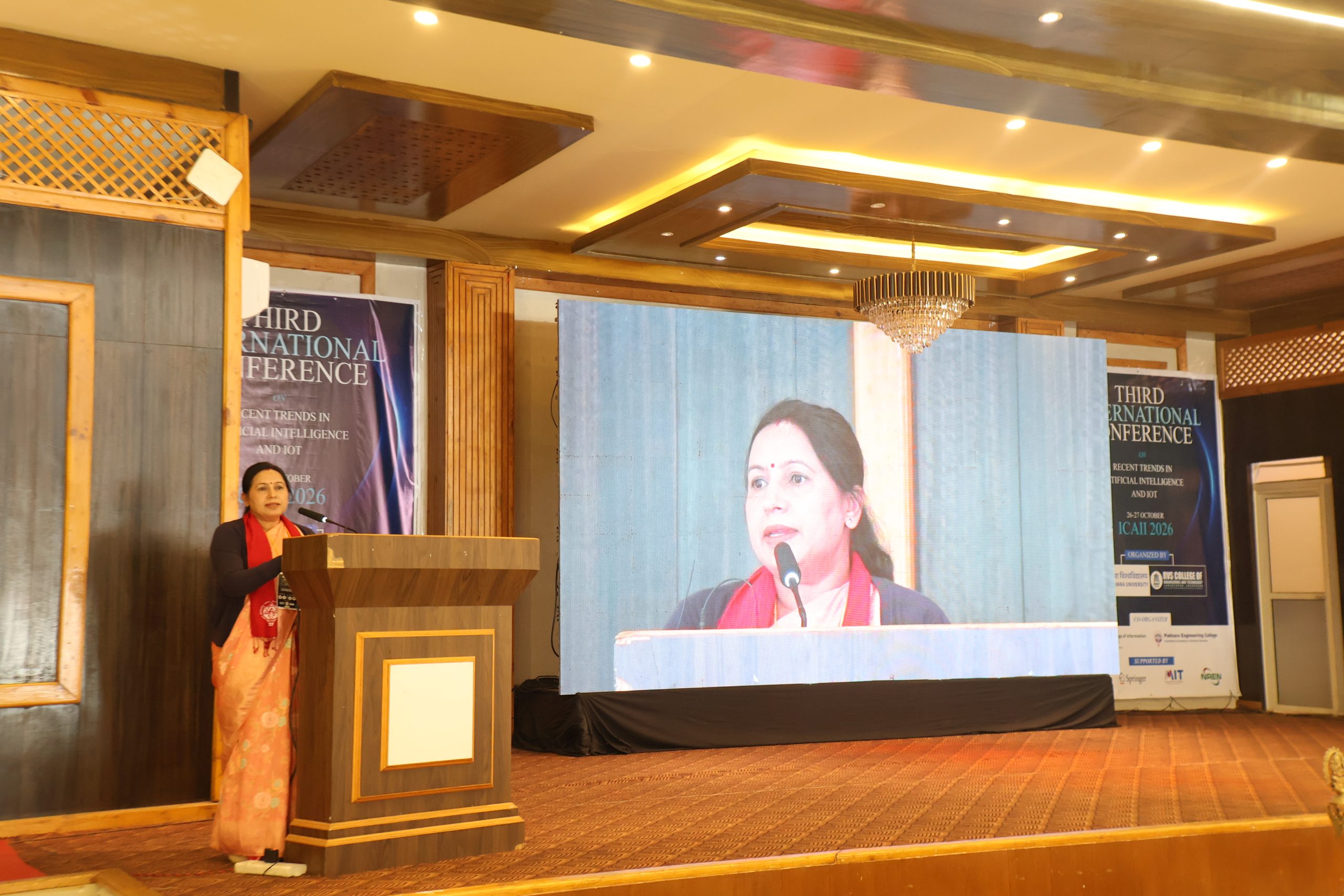
Addressing the gathering following the keynote session, Prof. Dr. Nirmala Jamarkattel, Registrar of Pokhara University, emphasized the importance of collaborative academic initiatives and expressed confidence that such international conferences would contribute significantly to strengthening research, innovation, and knowledge exchange among institutions. Dr. Deepmala Shrestha, Assistant Professor, School of Business, Pokhara University served as the master of ceremony of the inaugural session.
The conference then moved into its technical sessions, where researchers, academicians, and industry professionals presented their research findings throughout the day. The sessions were chaired by Dr. Bidur Devkota, Dr. Ram Mani Adhikari, and Dr. Madhu Sudan Kayastha, with support from co-session chairs Er. Krishna Ghimire, Er. Bhesh Bahadur Thapa, and Er. Sanjeev Thapa.
Among the presentations, four papers were recognized for their outstanding quality and presentation. The Best Paper Presenter Awards were presented to:
- Rajendra Gautam Jaishi for “Beyond Technology Acceptance: The Roles of Intrinsic Motivation and System Quality in Bank Employees’ Adoption of Digital Banking Tools.”
- Saroj Giri for “Robust Deepfake Detection: A Generalized Dual-Stream Spatial-Frequency Attention Network with Cross-Attention Fusion.”
- Kishore Babu Nampalle for “VIT-Adaptive HOG: A Hybrid Architecture Fusing Global and Adaptive Local Features for Satellite Imagery Classification.”
- Ganesh Saru for “A Transformer-Based Machine Translation System for the Low-Resource Western Magar–Nepali Language Pair.”
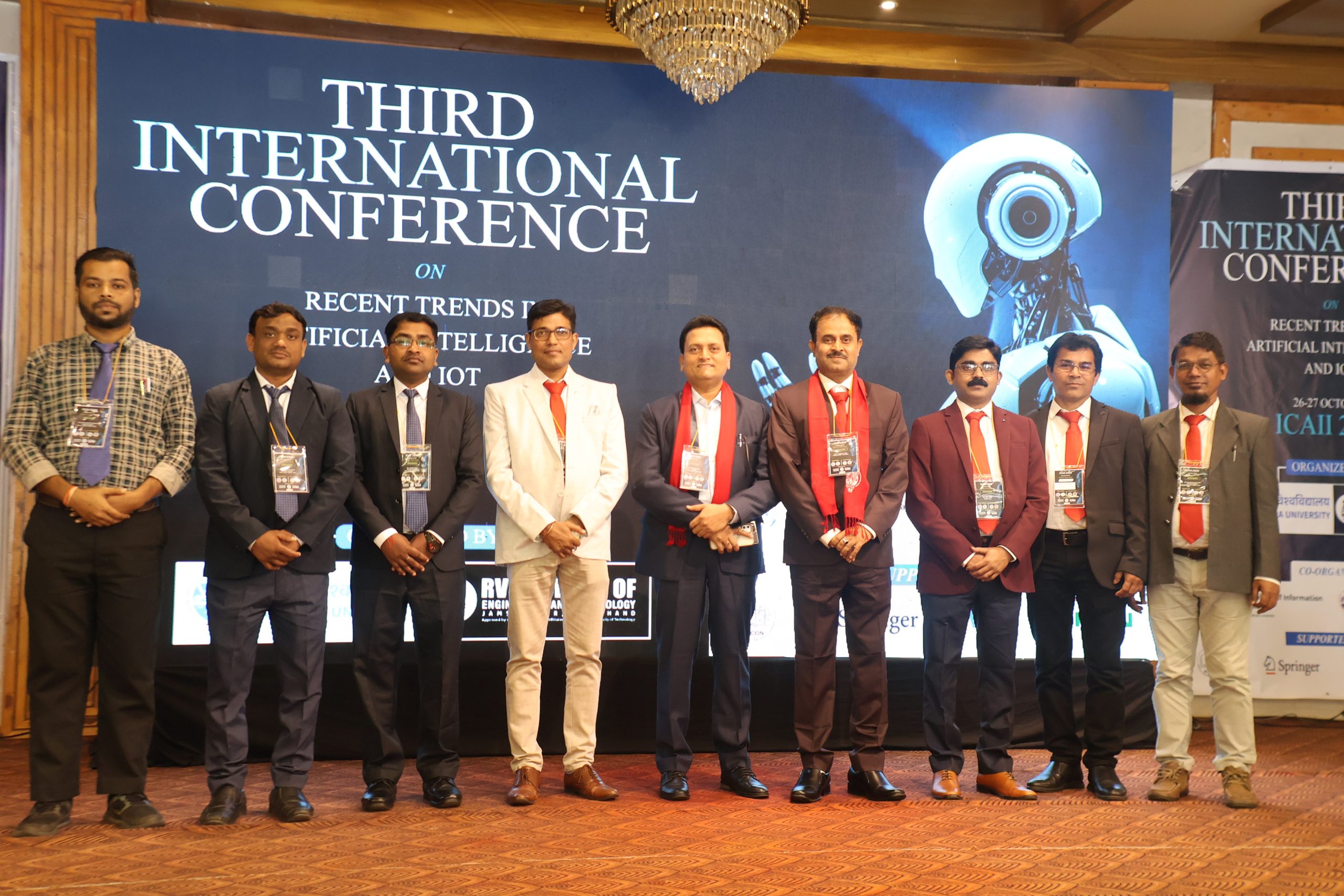
The conference concluded with a closing ceremony graced by Prof. Dr. Devendra Adhikari, Vice Chancellor of Pokhara University, as Chief Guest. The ceremony was attended by the Registrar, deans, executive directors, heads of divisions, faculty members of Pokhara University, and senior officials from RVSCET, including Mr. Shatrughana Singh, Director of RVSCET, Prof. Dr. Rajesh Kumar Tiwari, and other distinguished faculty members.
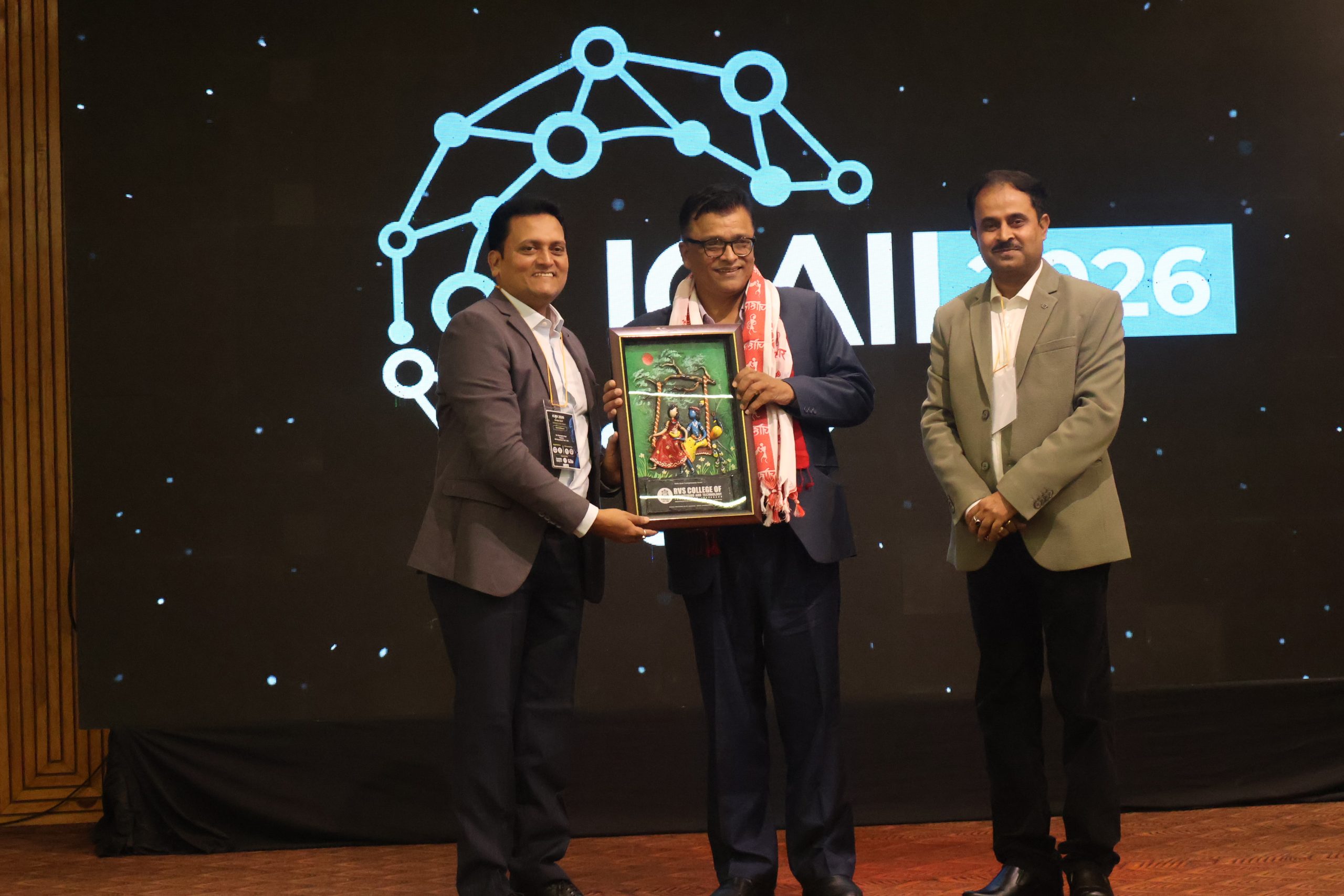
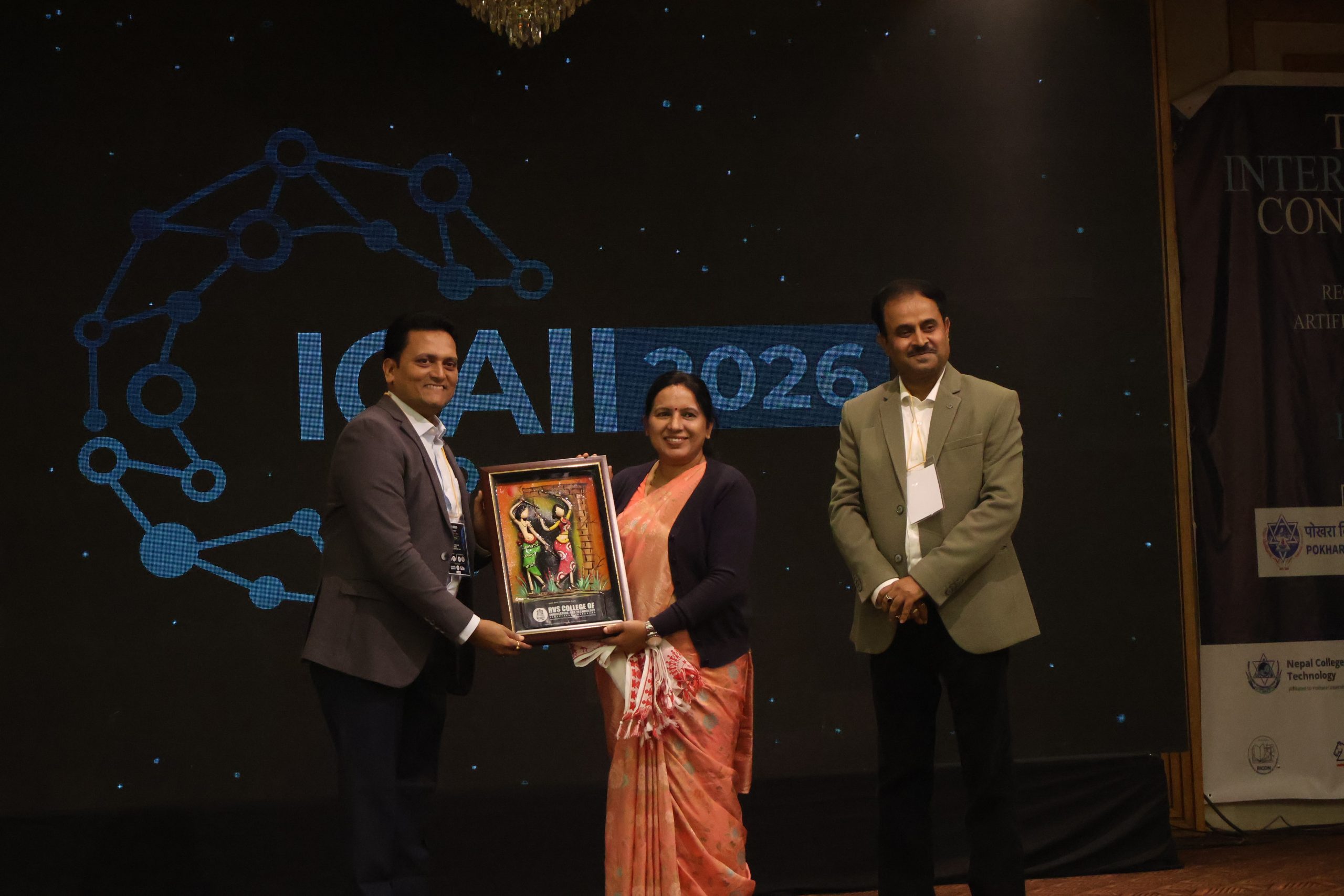
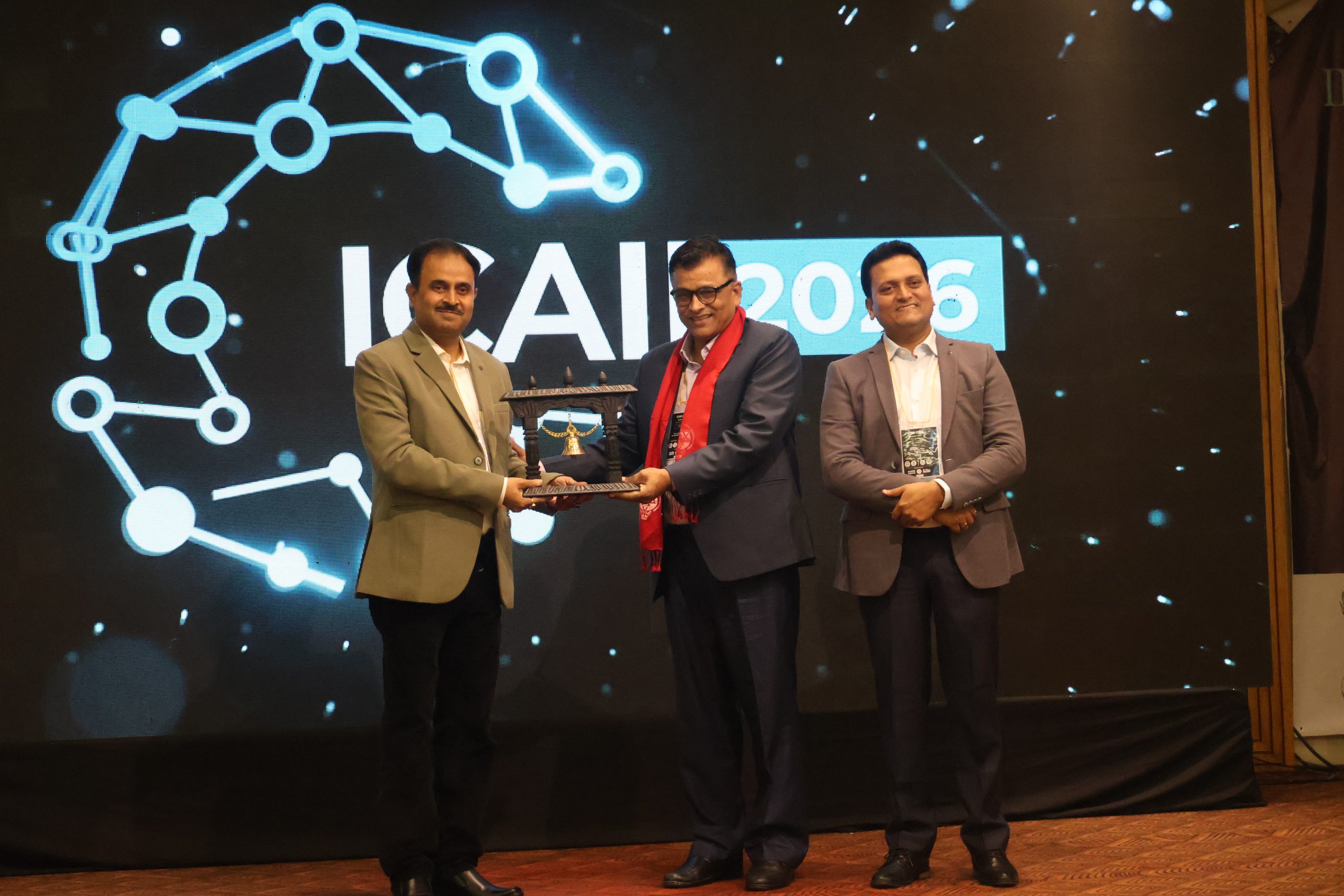
During the ceremony, tokens of appreciation were exchanged between Pokhara University, RVSCET, the co-organizing institutions, and supporting partners in recognition of their contributions toward the successful organization of the conference.
Addressing the closing session, Mr. Shatrughana Singh, Director of RVSCET, highlighted the role of the conference in further strengthening academic and professional collaboration between the two institutions as well as fostering greater cooperation between Nepal and India. Similarly, Assoc. Prof. Dr. Rishikesh Pandey, Dean of the Faculty of Humanities and Social Sciences, Pokhara University, emphasized the importance of integrating social sciences with emerging technological advancements in AI and IoT to address contemporary societal challenges.
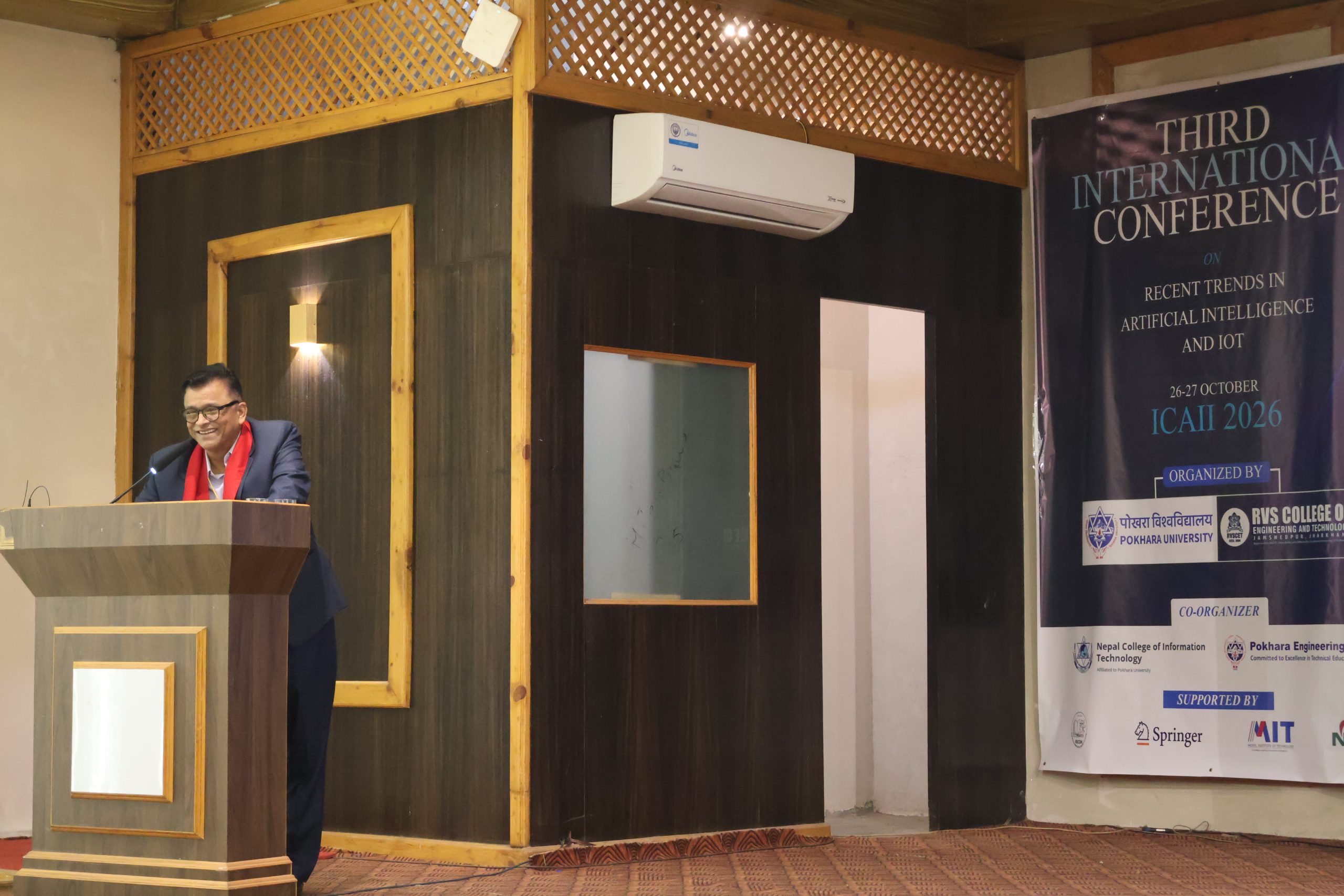
In his closing remarks, Prof. Dr. Devendra Adhikari, Vice Chancellor of Pokhara University, emphasized that artificial intelligence is rapidly becoming an integral part of society and that AI education is now essential for everyone. He stressed that research must not stop at publication; rather, research papers should produce meaningful results that directly benefit society. He expressed heartfelt gratitude to RVSCET for its valuable partnership and called for stronger collaboration in the days ahead. Extending his appreciation to all organizing partners, supporting institutions, researchers, delegates, and volunteers, he acknowledged their combined efforts in making the conference a resounding success. He also voiced strong optimism that the partnership between Pokhara University and RVSCET will continue to flourish through future joint initiatives, collaborative research, academic exchanges, and international programs.
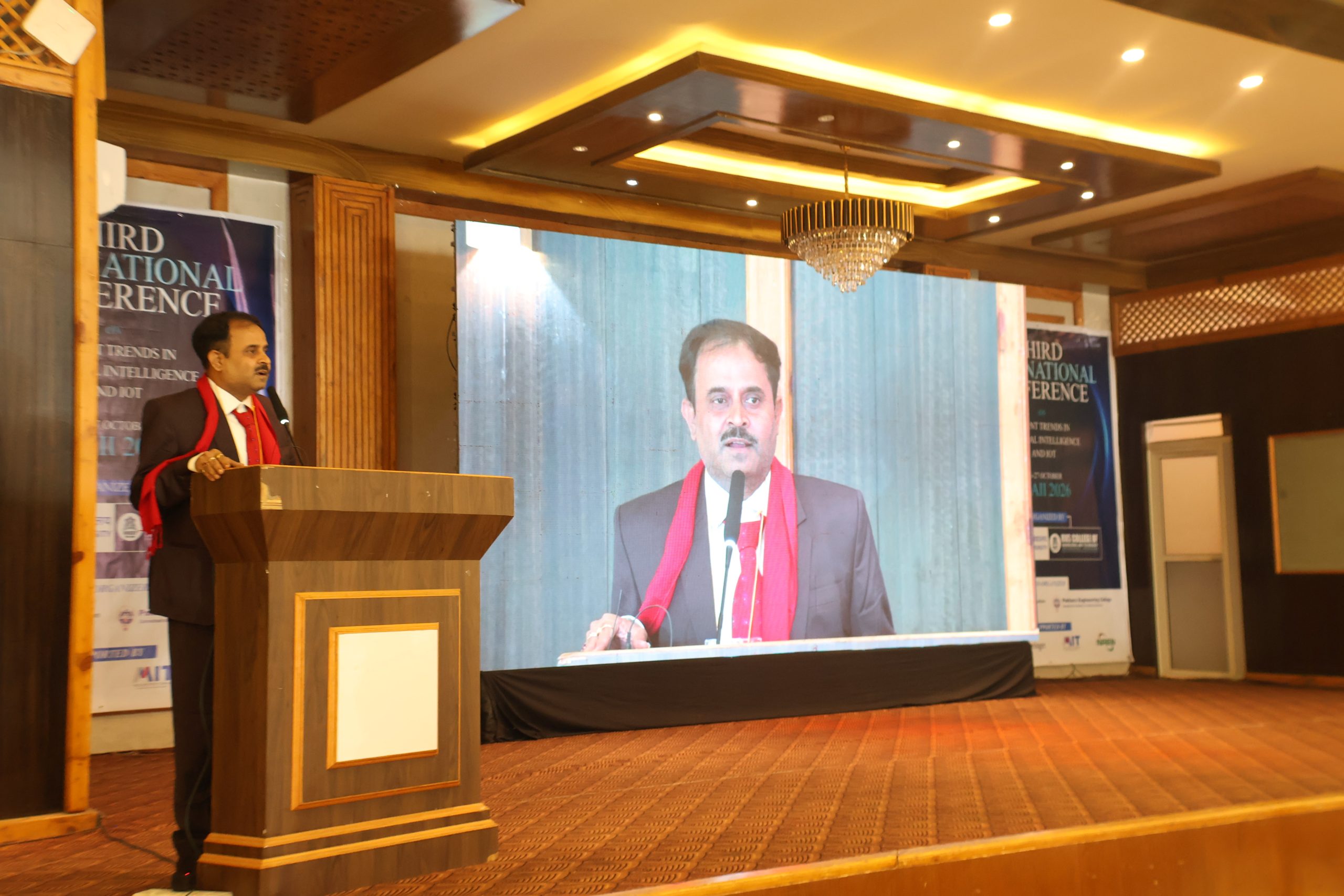
Prof. Dr. Rajesh Kr. Tiwari, Principal of RVSCET and a joint organizer of the conference, served as Conference Chair for both the Opening and Closing Ceremonies and played a key role in the success of ICAII 2026. At the Opening Ceremony, he thanked the keynote speakers and spoke about the growing importance of artificial intelligence and IoT in meeting today’s technological needs, while also stressing the value of international academic collaboration. In his Vote of Thanks at the Closing Ceremony, he expressed sincere appreciation to the organizing partners, supporting institutions, sponsors, volunteers, researchers, presenters, participants, and officials from Pokhara University. He noted that the conference showed the MoU between Pokhara University and RVSCET turning into real collaboration and said this momentum should be built upon. Reaffirming his institution’s commitment to stronger ties with Pokhara University, he announced that more international conferences, research symposiums, joint research projects, and academic initiatives will be pursued in the coming years.
The Vice Chancellor felicitated the visiting delegates, while Prof. Dr. Nirmala Jamarkattel, Registrar of Pokhara University, presented certificates of appreciation to the organizing team and volunteers.
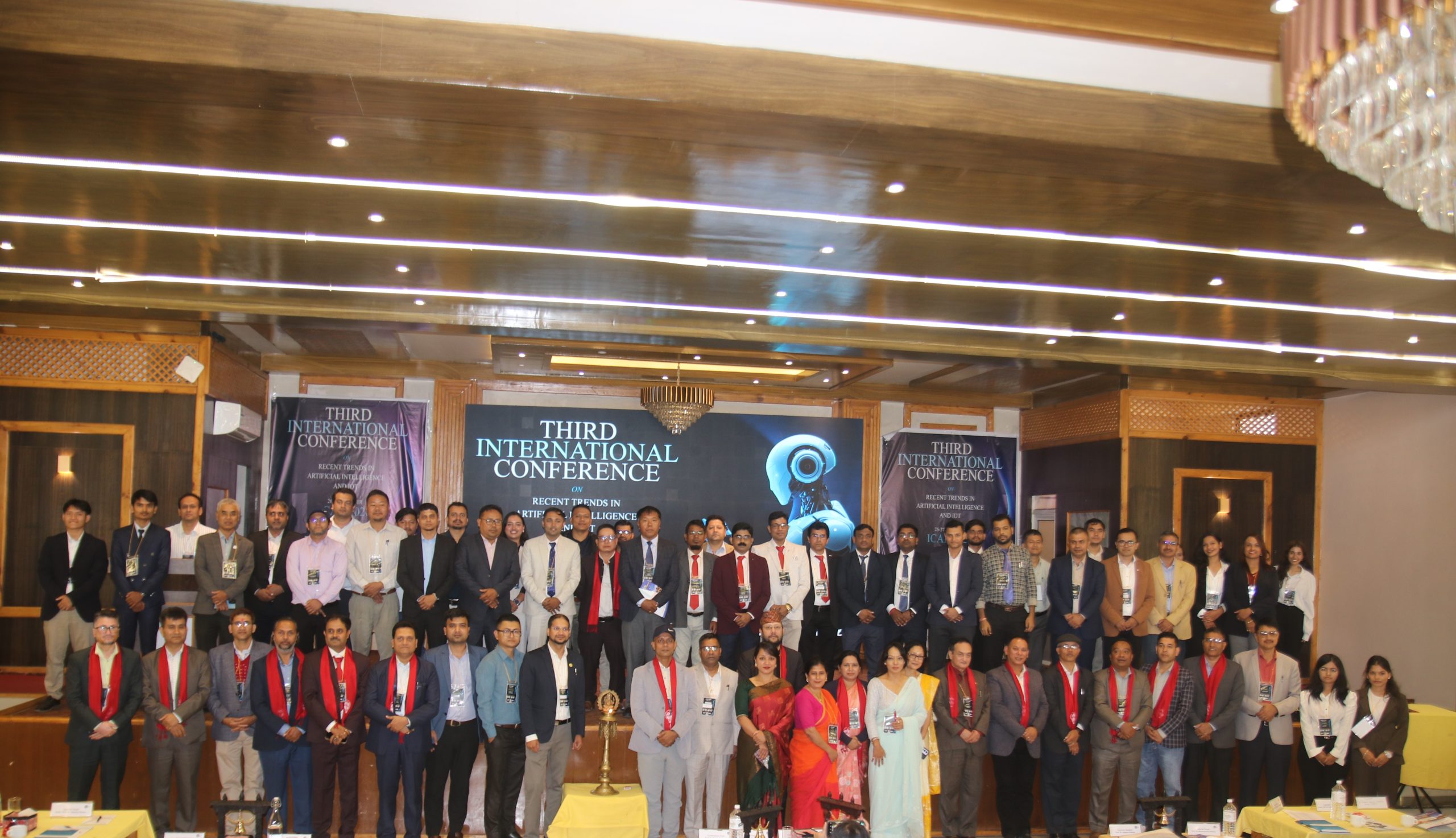
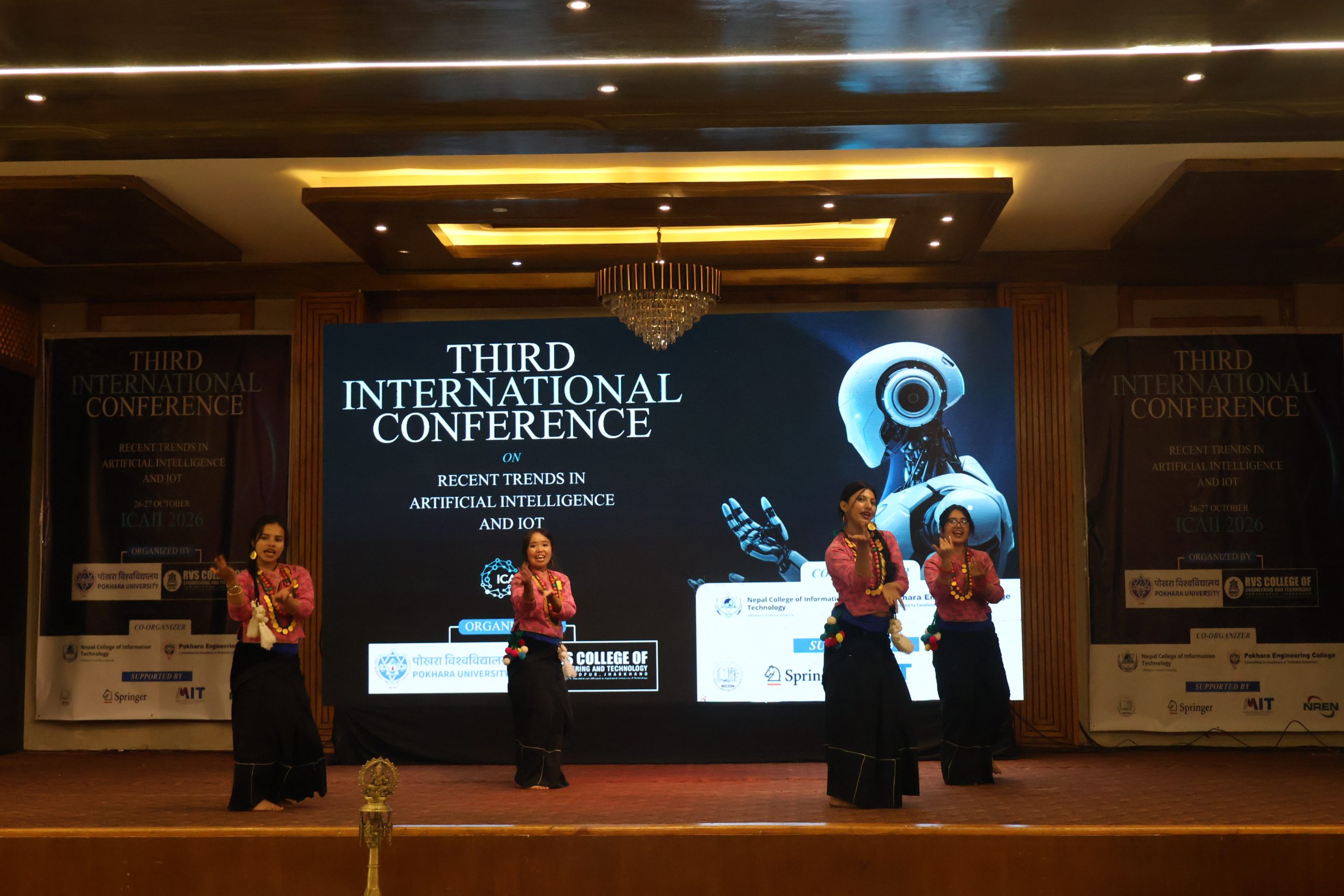
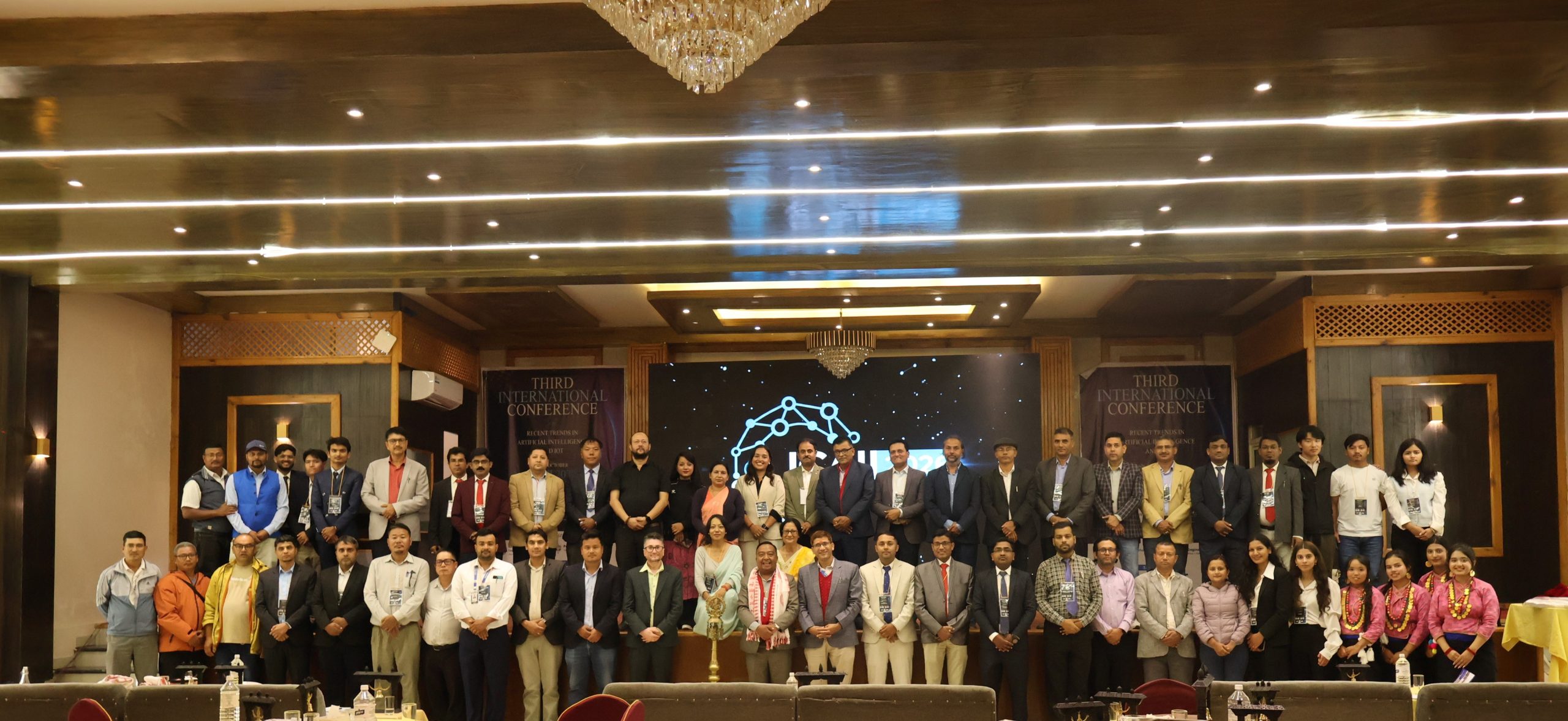
The conference witnessed enthusiastic participation from more than 80 participants, including the academic community, industry professionals, researchers, experts, and students from diverse institutions and countries. Students of Pokhara University actively supported the event as volunteers and enriched the program with cultural performances, contributing to the vibrant and collaborative atmosphere of the conference.
Through ICAII 2026, Pokhara University and RVSCET successfully created an international platform for scholarly dialogue, research dissemination, and academic collaboration, further reinforcing their shared commitment to promoting innovation, technological advancement, and global academic engagement.